
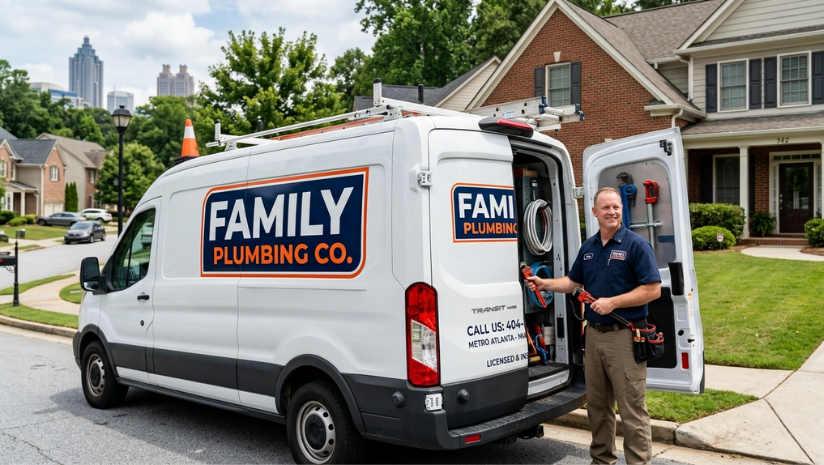
Family Plumbing Co. had been serving the Houston, Sugar Land, and The Woodlands areas for over 12 years. They had the reputation, the crew, and the trucks. What they did not have was a pipeline of inbound work they could count on.
When Marcus Reilly brought us in, the business was running almost entirely on word-of-mouth and a handful of Google reviews. Organic search was delivering fewer than 10 qualified leads a month across all three service areas combined. Competitors with weaker reputations and smaller teams were ranking above them for every term that mattered.
Eleven months later, Family Plumbing Co. receives over 11,200 organic sessions a month and closes more than 150 inbound leads — without spending a dollar on paid ads.
This is the full breakdown of how we did it.
The Challenge
When we ran the initial audit, the picture was clear. Family Plumbing Co. had been online for years but had never had a real SEO strategy behind their presence.
The core problems we identified:
Three markets, zero differentiation. The site had a single homepage and a generic services page. Houston, Sugar Land, and The Woodlands were all pointing to the same content with the same messaging. Google had no reason to rank them for local searches in any of the three.
No content depth. Competitors were winning because they had dedicated pages for every service — emergency plumbing, water heater installation, drain cleaning, pipe repair — with content that answered what customers actually searched for. Family Plumbing Co. listed everything on one page.
Weak domain authority. The site had accumulated almost no backlinks in 12 years. A handful of directory citations and nothing else. Without authority, even their best pages had a ceiling.
Technical issues dragging performance. Core Web Vitals were failing. The site loaded slowly on mobile, had duplicate title tags across service pages, and several crawlability issues that were preventing proper indexing.
No Google Business Profile strategy. Each of the three markets needed a distinct local presence, but GBP profiles were either incomplete or inconsistent with the website.
The bottom line: they were invisible in search at the exact moment customers needed a plumber.
What We Did
We built the strategy around one principle — own each market as if it were a separate business, then let the combined authority lift all three.
Phase 1: Technical Foundation and Quick Wins
Before creating any content, we fixed what was broken.
We resolved the Core Web Vitals failures by compressing images, deferring non-critical scripts, and working with their host to enable caching. Mobile load time dropped from 6.8 seconds to under 2.
We restructured the site’s URL architecture to create clear silos for each city and each service type. This gave Google a map of exactly what Family Plumbing Co. offered and where.
Duplicate title tags and missing meta descriptions were corrected across all pages. Schema markup for LocalBusiness and Service was added to every key page, including proper geo-coordinates and service area definitions.
We also completed and optimised all three Google Business Profile listings — consistent NAP data, full service categories, photo uploads, and Q&A seeding for the most common queries.
Within 6 weeks, impressions had doubled even before new content was live.
Phase 2: City-by-City Content Architecture
We mapped out the complete keyword universe for plumbing across all three markets — over 340 individual search terms — and grouped them into clusters by city and by service.
The result was a content build plan of 47 pages:
- 3 location landing pages (one per city, built as proper service hub pages)
- 14 service-specific pages per city for the highest-volume jobs: emergency plumbing, drain cleaning, water heater installation and repair, burst pipe repair, slab leak detection, repiping, and bathroom/kitchen plumbing
- 8 supporting blog posts targeting how-to and comparison queries to capture top-of-funnel traffic and build topical authority
Every page was written to answer what a homeowner in that specific city actually searches for — not generic copy pasted across locations. Sugar Land homeowners search differently from The Woodlands homeowners. We wrote accordingly.
Phase 3: Link Building for the Pages That Drive Revenue
We ran a targeted link acquisition campaign focused entirely on the three city landing pages and the five highest-converting service pages.
Our criteria for every link:
- DR 35 or above
- Genuine organic traffic (verified in Ahrefs)
- No traffic decline in the prior 6 months
- Relevant to home services, construction, or local Houston-area content
Over 11 months we secured 38 qualifying backlinks to priority pages. This was a deliberate, quality-over-quantity approach — every link was a meaningful vote of authority for the pages customers were most likely to convert from.
Phase 4: Review Velocity and Local Signals
Rankings in the Google Map Pack are won as much by local signals as by on-page SEO. We built a simple post-job review request sequence for Marcus’s team — a two-message SMS flow sent 24 hours after job completion.
Google reviews across the three GBP profiles went from 43 total to over 290 in 11 months. Average rating held at 4.9 stars. Map Pack visibility for core terms tripled.
Phase 5: Monthly Optimisation Cycle
Every month we reviewed ranking movements, identified pages stalling below position 5, and made targeted improvements — internal linking additions, content expansions, title tag refinements, and structured data updates.
We also built a full internal linking map across the 47 pages, ensuring every city and service page received authority flow from the blog content and from the homepage. No page was left isolated.
Results
The numbers tell the story clearly.
When we started, Family Plumbing Co. was receiving approximately 418 organic sessions a month across all three markets combined. Eleven months later that figure is 11,200 monthly sessions — a 26x increase.
More importantly, those are not vanity visitors. The site now generates an average of 157 qualified inbound leads per month — homeowners in Houston, Sugar Land, and The Woodlands actively looking for a plumber and finding Family Plumbing Co. at the top of search.
Ranking highlights after 11 months:
- 34 keywords now rank #1 on Google
- Houston emergency plumber — Position 1
- Sugar Land water heater installation — Position 1
- The Woodlands drain cleaning service — Position 1
- Houston slab leak repair — Position 2
- Plumber Houston TX — Position 3 (from outside the top 50)
Map Pack appearances for the three GBP profiles increased from sporadic visibility to consistent top-3 placement for all core service terms in their respective cities.
Marcus and his team went from chasing leads to managing capacity. They hired two additional crews in month nine to handle the volume.
Key Takeaways
Treat every city as its own market. Sending all three service areas to the same generic content will not work. Each city needs its own landing page, its own keyword targeting, and its own local signals. When you build for each market properly, the combined authority compounds faster than building for one location alone.
Fix the technical foundation before writing a single word. Content placed on a slow, poorly-structured site performs a fraction of what it should. The technical work in the first six weeks was responsible for early ranking lifts before any new pages went live.
Reviews are a ranking signal, not just social proof. The review velocity campaign directly contributed to Map Pack improvements. For local service businesses, GBP optimisation deserves the same attention as the website itself.
Build links to pages that print money. Every link we acquired went to a page directly tied to inbound leads. Spreading link equity thinly across the site produces slow, diffuse results. Concentration on commercial pages produces faster, measurable ranking gains.
Internal linking is compounding infrastructure. The 47-page content architecture only delivers its full value when pages pass authority to each other intelligently. A proper internal linking map turned individual strong pages into a network that lifted the entire site.
The SEO Doctors didn't just improve our rankings — they built us a lead machine. We went from struggling to fill the schedule to turning away work. Three cities, fully booked.